Anna Brooks · 10 October 2026
Restoration Effort Revives Baycrest Town Hall Clock Tower
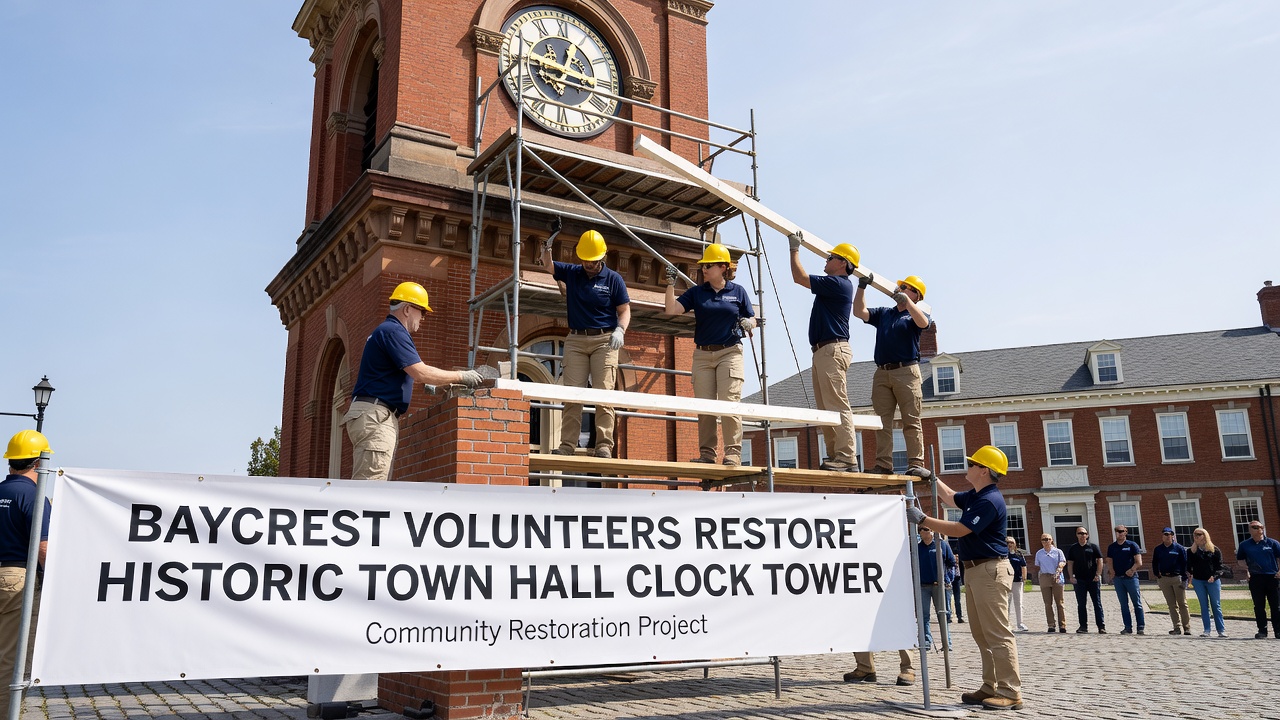
Baycrest volunteers have completed a multi-year project to restore the historic Town Hall clock tower, with final phases wrapping up in October 2026. The effort focused on structural repairs, clock mechanism refurbishment, and preservation of original architectural details from the 1890s building. Local records show the tower has stood as a central landmark since its construction in 1894, and community members formed the Baycrest Heritage Restoration Group in 2022 to address years of weathering and mechanical wear.
Project documentation lists specific tasks completed over the past four years, including replacement of damaged masonry, repainting of the copper dome, and recalibration of the clock gears. Volunteers coordinated with certified heritage masons and horologists to maintain authenticity while meeting modern safety standards. According to the Canadian Register of Historic Places, similar towers across the country have undergone comparable work to prevent further deterioration from climate exposure.
Background on the Town Hall Structure
The Town Hall originally served as the seat of municipal government until the 1970s, after which the building transitioned to community use. Its clock tower features a four-faced mechanism manufactured by the E. Howard Clock Company, which required disassembly and cleaning during the restoration. Archival photographs from the early 1900s guided decisions on paint colors and ornamentation, ensuring the finished appearance matched the original design. One study from the University of Toronto's heritage conservation program examined comparable Canadian clock towers and found that volunteer-led projects often extend the lifespan of these structures by decades when paired with professional oversight.
Funding for materials came through a combination of municipal grants and private donations tracked by the Baycrest Community Foundation. Volunteer hours logged exceeded 8,500 across the initiative, covering everything from scaffolding setup to research on period-appropriate hardware. Observers note that the group maintained public updates through monthly progress reports posted at the town library.
Key Phases of the Work
Early stages concentrated on scaffolding installation and safety assessments in 2023, followed by masonry stabilization in 2024. The clock faces received new protective coatings in 2025, while the interior staircase and bell chamber saw reinforcement work completed ahead of the October 2026 reopening. Electrical upgrades added LED lighting that highlights the tower at night without altering its daytime appearance. Those involved documented each step with photographs and material samples stored at the Baycrest Historical Society archive.
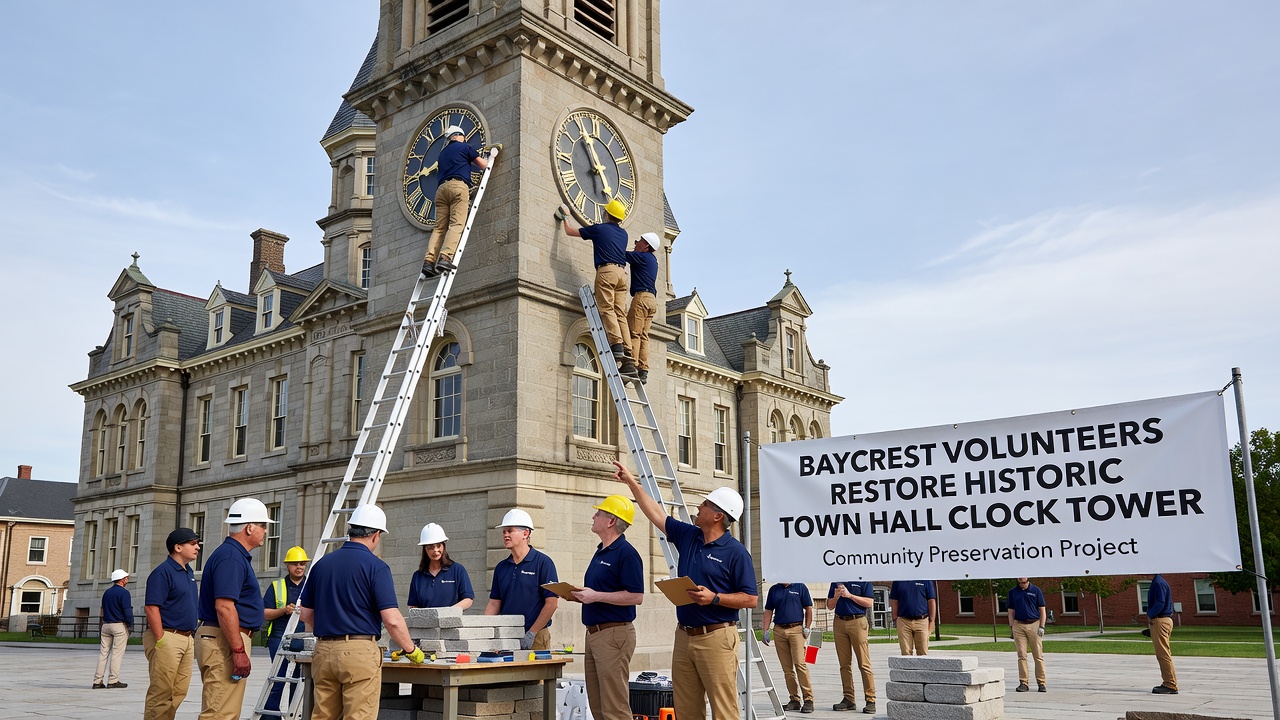
Challenges included sourcing replacement parts for the original clockworks, which required importing components from specialized suppliers in Switzerland. The project team adapted by fabricating certain elements locally under guidance from the National Trust for Canada guidelines on heritage materials. Weather delays pushed some exterior painting into the fall of 2026, yet the core mechanical restoration finished on schedule.
Community Involvement and Documentation
Residents contributed through oral history interviews that captured personal memories of the clock tower's role in daily life. These accounts, now digitized, supplement the physical restoration records. Participation extended beyond Baycrest proper, with volunteers traveling from neighboring areas to assist during peak work periods. teh Canadian Conservation Institute has referenced similar community projects in its training materials for heritage volunteers, highlighting methods used in Baycrest as practical examples.
Public access to the tower interior resumed in late October 2026, allowing visitors to view the restored mechanism during scheduled hours. Signage inside explains the restoration sequence and credits participating groups without interpretive commentary. Ongoing maintenance plans call for annual inspections by the same volunteer cohort that led the initial effort.
Conclusion
The completed restoration returns the clock tower to operational status while preserving its historical integrity. Records from the Baycrest municipal archives confirm the structure's continued function as a timekeeping and visual landmark for the area. Future monitoring will track the effectiveness of the interventions performed between 2022 and 2026.